
Creating independent space at home for adult children returning from travel, study or business — without losing family balance.
It’s happening more often across Wellington, the Kāpiti region and Horowhenua.
Adult children are moving home — not because something’s gone wrong, but because it makes financial sense.
We’ve started noticing a bit of a pattern locally. Families are usually very happy to have adult kids home — it’s just that the house doesn’t always keep up with real life.
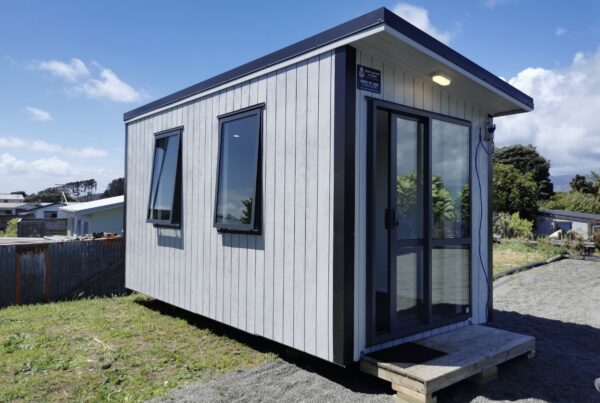
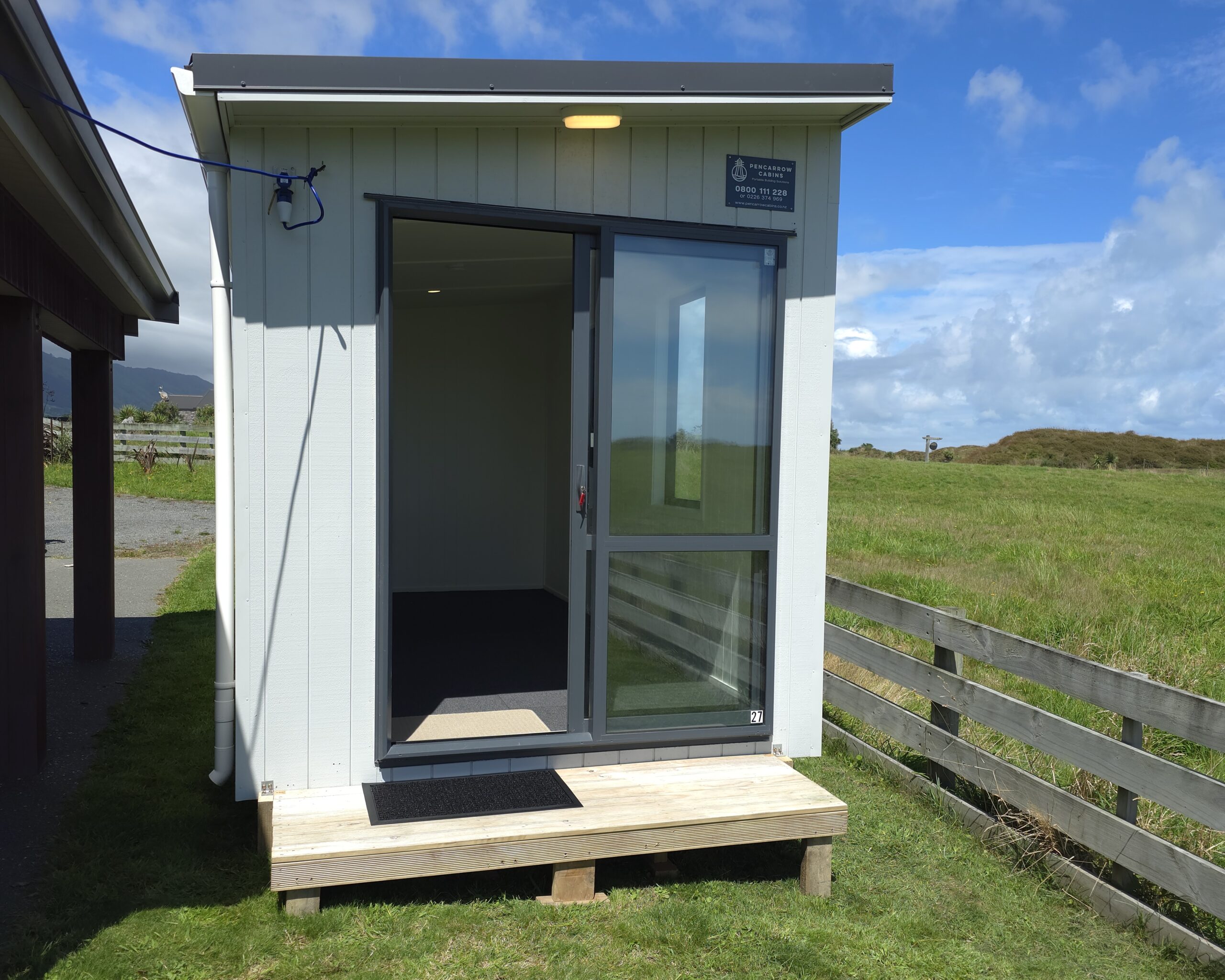
For many families, creating a separate cabin space at home becomes the simplest way to maintain independence while living together.
Recently we’ve worked with three families navigating exactly this.
One young man returned from a sports scholarship in the United States and moved back into his old bedroom in Upper Hutt. The other two, based in Kāpiti and Horowhenua, had been flatting but chose to come home — one to work full time while studying, the other to study while working part-time and reduce living costs.
All three families were pleased to have their children home.
The issue wasn’t relationships.
It was the setup.
When the Old Setup No Longer Fits
In the Upper Hutt home, the son initially moved back into his childhood bedroom. It worked briefly — but he wasn’t a teenager anymore.
He was running his own business from home, taking calls, managing clients, and needing proper desk space and somewhere that felt like his own. His mum shared something that really captured the heart of it.
These young adults are already used to living independently. Moving home isn’t a step backwards — it’s a conscious decision to keep their independence while accepting family support so they can pivot and prepare for the next stage. As she put it, we want our kids to go out and be independent — but to be smart about it. They should enjoy their lives and enjoy where they live, rather than feel trapped in the “wheel of doom” just to keep finances coming in so they can afford a roof over their heads.
The option of a cabin, can mean these young adults can travel more, or work and live in their own space — and their parents can have their space back to host guests and live normally too.
It’s a win-win.
In Kāpiti and Horowhenua, the two young adults moved directly from flatting into their own separate cabin at home. Having that independence from day one made the transition straightforward. They kept their routines, had their own area to focus, and could work or study without rearranging the main house.
No drama. No adjustment period.
Just a setup that matched where they were at in life.
A Growing Pattern Across Our Region
Across Wellington, Kāpiti and Horowhenua, more families are choosing practical solutions over expensive rentals.
The reasons vary:
• Saving for a house deposit
• Returning from overseas
• Building a business
• Studying while working
• Planning to go flatting again once finances are sorted
When it works well, independence remains part of the equation.
Pressure usually isn’t about people — it’s simply that the house hasn’t kept pace with how everyone is living now.
What Actually Changes Things
In each of these three homes, creating a separate area shifted the dynamic immediately.
It provided:
• A proper work-from-home or study environment
• Clear boundaries between shared areas and personal space
• Privacy for parents and adult children
• A layout that felt intentional rather than temporary
The young man who returned from his scholarship is now running his business from home while saving with friends to go flatting again in around six months.
Another is studying and working with a quiet place to focus.
Alan, whose family we worked with in Horowhenua, summed it up perfectly after setting up a room for his son:
“The cabin? Exactly as described. Actually, better. Clean, sharp, solid… Not just a room — his space. Top people. Top product. Easy as.”
Alan’s experience isn’t unusual — many of the families we work with are navigating similar stages of life. If you’re interested, you can read more of his review, along with others shared by Wellington, Kāpiti and Horowhenua families, here.
That idea of creating “their own proper space” comes up often. When someone is living in a room every day — studying, working, building something — it needs to feel solid, warm and properly finished. Otherwise it just becomes another compromise.
We’ve also found that when a cabin is positioned carefully and finished to feel like part of the property from day one, families settle into it quickly. It doesn’t feel like a stopgap. It simply works. You can see more about how our cabins are designed and positioned here.
The Point Where Families Usually Start Looking at Options
It’s often not a big dramatic moment.
More commonly, someone is working from the dining table, the old bedroom feels smaller than it used to, or routines overlap simply because everyone is living fuller lives than the house was originally designed for.
That’s usually when families begin thinking less about rearranging furniture — and more about creating something that genuinely supports how things are working now. Many families start by exploring flexible rental options first.
Why This Is Becoming Normal in NZ
Multigenerational living is no longer unusual in New Zealand — especially in areas like Wellington, Kāpiti and Horowhenua where sections allow flexibility.
More families are realising that short-term transitions don’t need to feel cramped.
They can feel constructive.
And often, six to twelve months of the right setup is all that’s needed before the next step — flatting, travelling, buying, or moving on.
Supporting Independence While Living at Home
When adult children move home to save money in New Zealand, it isn’t about going backwards.
It’s about creating breathing room so they can move forward properly.
Sometimes the difference between something feeling tight and something working well simply comes down to whether the house reflects the stage of life someone is actually in.